

For almost a century, nuclear fusion has been primarily a scientific challenge: proving that it was possible to replicate on Earth the process that powers the stars. Today, the challenge is evolving into one of engineering, industrialisation, capital and the market.
This distinction is fundamental, because it radically changes the way a professional investor should view the sector.
“Is fusion achievable?”
The question has become:
“Is it possible to build a power station that produces net electricity continuously, economically and at an acceptable cost of capital?”
In 2026, there is a genuine industrial race towards fusion. The sector’s four key figures are summarised below.
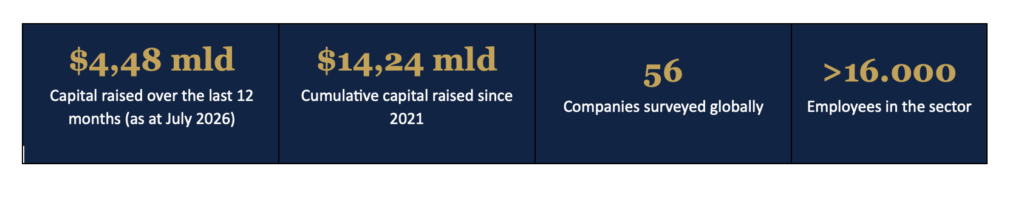
Figure 1. Key indicators of the fusion industry, September 2026. Source: Fusion Industry Association, The Global Fusion Industry in 2026.
Furthermore, the capital is becoming qualitatively different: it no longer comes solely from venture capital and technology funds, but also from pension funds, sovereign wealth funds, industrial companies, energy firms and hyperscalers (the operators of large data centres, e.g. AWS, Azure). The real turning point is the shift from fusion science to the fusion industry — but this does not mean that commercial fusion has been proven.
An update from the Financial Times confirms the trend: in the first eight months of 2026, fusion start-ups attracted a record $3.8 billion in private capital according to PitchBook, already surpassing the entire previous year’s figure ($3.3 billion, itself an all-time record).
However, a 2026 survey by the Fusion Industry Association also reveals a divergence in expectations within the sector: 32 out of 45 companies surveyed claim they will be able to supply commercial-scale energy by 2040 — a significant minority disagree, even amongst industry insiders (Financial Times, September 2026).
As of September 2026, a number of fundamental issues remain unresolved:
• plasma confinement and stability
• net energy at plant level
• materials subjected to neutron bombardment
• tritium production
• fuel cycle
• component maintenance
• operational lifespan
• plant availability
• cost of the power station
• licences and grid connection
• final cost of electricity
From a financial perspective, fusion must therefore still be regarded as a very high-risk deep-tech asset class, but one with an extraordinarily high potential payoff. For a professional investor, there is as yet no convincing reason to treat it as a traditional energy investment: instead, there is a case to be made that fusion represents a long-duration technology option.
Furthermore, the most attractive investment may not necessarily be the company that builds the first reactor, but rather the suppliers of technologies that are difficult to replace: HTS magnets, advanced materials, cryogenic systems, power electronics, gyrotrons, vacuum technology, fuel cycle systems and high-temperature components.
For our readers, this topic is not new, having already been introduced earlier this year in an in-depth analysis dedicated to the same issue: the industrialisation of nuclear fusion. However, given the complexity of the subject, we thought we would summarise some key concepts in a report, available for download from our website, where – as always – we do not offer investment advice, but use concrete examples to explain in practical terms what we believe to be the most sensible approach to this type of investment. Reading the report should at least make it clear why ‘Helium’ appears in the title of this post.
Disclaimer
This post reflects the personal opinions of the Custodia Wealth Management staff who drafted it. It does not constitute investment advice or recommendations, nor does it constitute personalised advice, and should not be regarded as an invitation to carry out transactions in financial instruments.
