

But do you really think we’d forgotten about it? Private debt, that is. Unfortunately, in such an opaque sector, we can only rely on signals from the press or industry insiders to assess the situation; and these signals came from an August 17 FT article titled “Private credit under strain as troubled loans swell.” And as you might imagine, these are not positive signs.
The article raises some concerning points. It begins with a comparison: the credit stress of 2017 was, in many respects, comparable to the current situation. Between mid-2014 and early 2016, the price of oil plummeted from over $100 per barrel to less than $30, due to increased U.S. production of shale oil and gas (fracking), global oversupply, and OPEC’s decision not to cut production to defend its market share (see Figure 1).
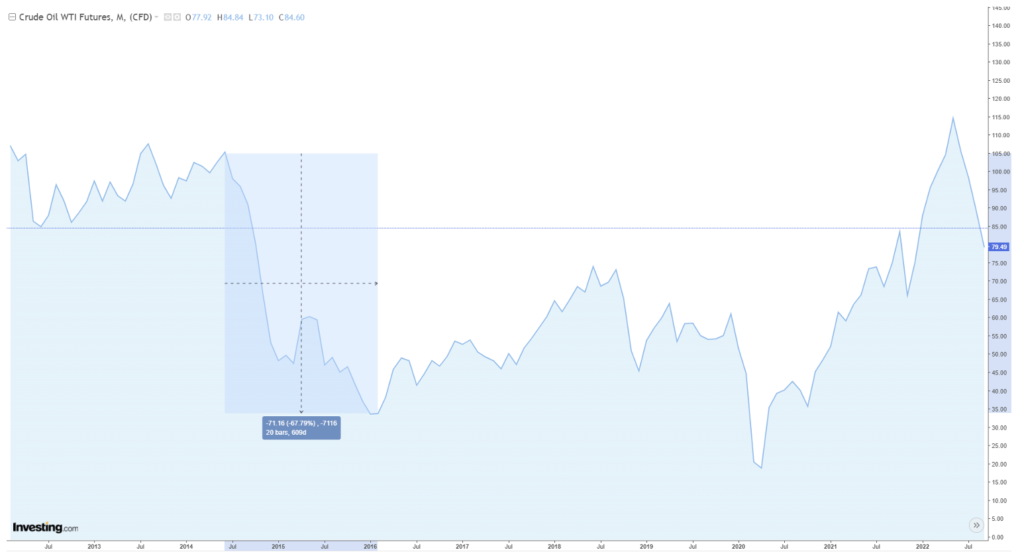
Figure 1. Oil prices from 2014 to 2016: a 70% drop.
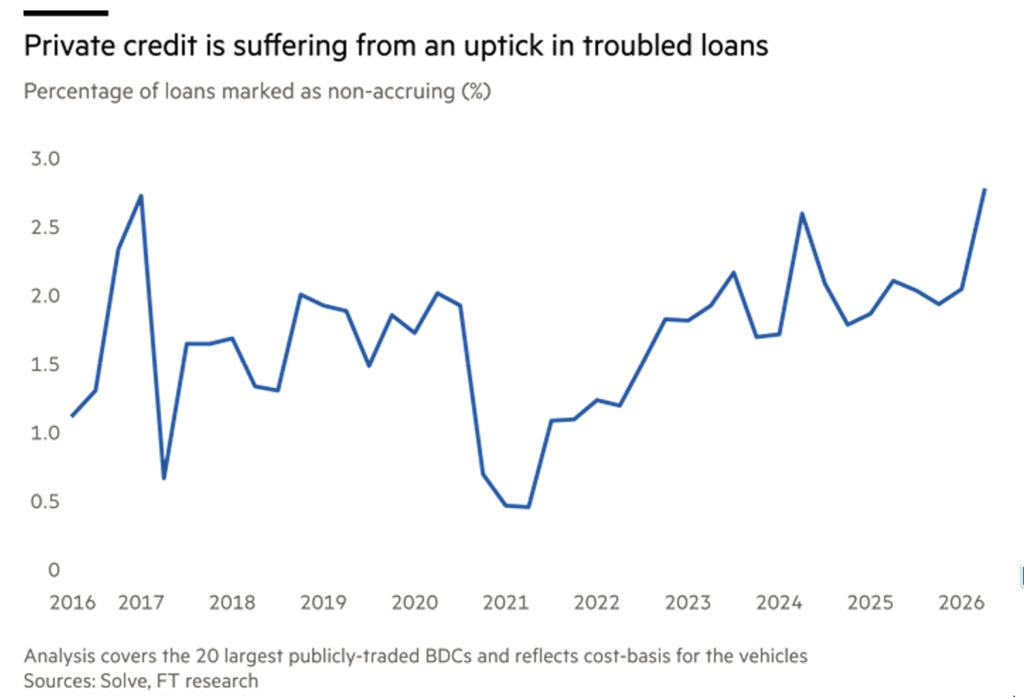
Figure 2. Non-performing loan index.
Several publicly traded BDCs reduced their assets under management in the second quarter, with loan repayments and sales exceeding new commitments (KKR, Blue Owl, and Apollo’s MidCap Financial). The BDC BlackRock TCP Capital Corp has gone through a difficult period: the fund sold a $523 million block of loans to strengthen its balance sheet, and BlackRock has hired investment bankers to explore options for the vehicle’s future—including potentially selling the assets and winding down the fund itself.
We discussed BDCs in our In-Depth Analysis on March 6, 2026, but it’s worth refreshing your memory here. These are publicly traded investment vehicles that provide private credit—that is, they lend money directly to companies (typically mid-sized U.S. firms), often at variable rates and secured by the assets of the financed company: in practice, they are publicly traded SPVs (Special Purpose Vehicles) that perform the role of banks.
Under U.S. law, they must distribute most of their profits as dividends to shareholders, which makes them popular among investors seeking returns.
Their shares are publicly traded, so anyone can buy them just as they would a regular stock, while indirectly investing in a portfolio of private loans.
Shares of the major listed BDCs have fallen since clouds began gathering over the private debt sector (see Figure 3).
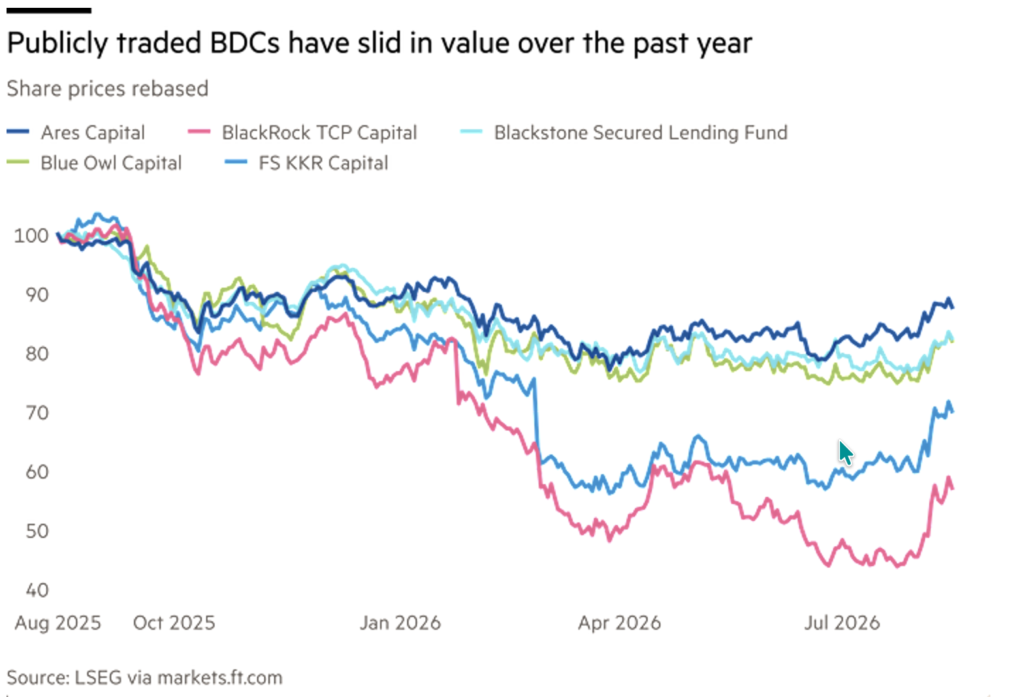
Figure 3. Stock performance of major listed BDCs.
Another worrying sign is the downplaying of the problem by the sector’s leading managers, who have made more or less explicit accusations to the press: this is a pattern we’ve seen many times before, especially in highly opaque sectors like this one, and it suggests we should remain on high alert. The reality is that a large portion of the losses incurred by these managers stem from loans granted between 2020 and 2021, when interest rates were near zero and private equity firms were making acquisitions at high valuations; now those companies are struggling to repay their debt due to higher interest rates.
Three cases are worth mentioning as prime examples of this situation, all of which follow the same pattern: companies that were funded at high valuations in 2020–2021 at near-zero interest rates, which are now unable to sustain the cost of debt refinanced at higher rates, forcing private credit funds (often in consortia, such as Blackstone and KKR) to write down their holdings or take direct control of the underlying companies.
Medallia
Who they are: Medallia is a customer experience management software company that helps businesses collect and analyze feedback from customers and employees.
The context: Thoma Bravo, one of the largest private equity firms specializing in software, acquired Medallia in 2021 in a leveraged buyout (LBO) during a period of low interest rates, when software company valuations were at all-time highs.
What happened: As interest rates rose and growth was expected to slow, Thoma Bravo ceded control of the company to its creditors (including Blackstone and KKR), effectively forfeiting its $5 billion equity investment. This is a typical scenario in a troubled LBO: when the company’s value falls below the level of its debt, the shareholders (private equity firms) lose everything, and the creditors become the new owners through a restructuring. Blackstone wrote down its loan to less than 50 cents on the dollar at the end of June (down from 60 cents in March), indicating that the recoverable value is now estimated at less than half of the principal lent.
Cornerstone OnDemand
Who they are: Cornerstone OnDemand is a human capital management software company specializing in corporate training and employee performance management platforms.
What happened: The Ares fund wrote down the value of the loan granted to this company, adding it to the list of troubled software portfolio investments. The fund manager does not provide the exact amount of the write-down or other specific information; however, we believe it is likely that this case falls into the same group of companies financed during 2020–2021 that are now struggling to generate sufficient cash to service their debt.
Affordable Care
Who they are: Affordable Care is a dental services company that provides administrative and management support to dental practices, a common business model in the U.S. private healthcare sector.
What happened: Unlike the first two cases (software), this involves an actual debt default—not just an accounting write-down, but a genuine default. Blackstone and KKR, as creditors, took control of the company after the default—a common outcome when a loan transitions from “non-performing” to “non-accrual” and then to full-blown insolvency: creditors become owners to protect the recoverable value, often by converting debt into equity.
So, to sum things up and understand the level of risk we’re facing, it helps to revisit everything we’ve written on our website regarding this topic, where we can identify a common thread. Retail investors—initially lured by the allure of semi-illiquid investments and high interest rates compared to those offered by listed debt—have, for some reason, begun to withdraw their investments, causing more than a few problems for funds and BDCs. These redemptions, however, were managed prudently, as up to a certain percentage, redemptions were covered by liquidity and new inflows. When the pressure became too high, the first “gates” were triggered to protect the remaining investors, sparking a series of “entirely unwarranted” lawsuits—about which the managers certainly need not worry, since these gates are provided for in the articles of association and memoranda. Up to this point, we believe the situation was handled very well. However, when the first write-downs of loans in the portfolio began, we started to raise some concerns, though we remained within the realm of déjà vu and thus did not venture into uncharted territory. Nevertheless, the specter of excessive concentration of loans granted to companies in the same sector loomed large; indeed, we can even assert that this pertains to a specific segment of a sector. The write-downs and restructurings that are now emerging confirm that these concerns are well-founded, just as the uncertainty characterizing the systemic dimension of this asset class is a fact.
Disclaimer
This post expresses the personal opinions of the Custodia Wealth Management staff members who authored it. It does not constitute investment advice or recommendations, nor does it constitute personalized consulting, and should not be considered an invitation to engage in transactions involving financial instruments.
