
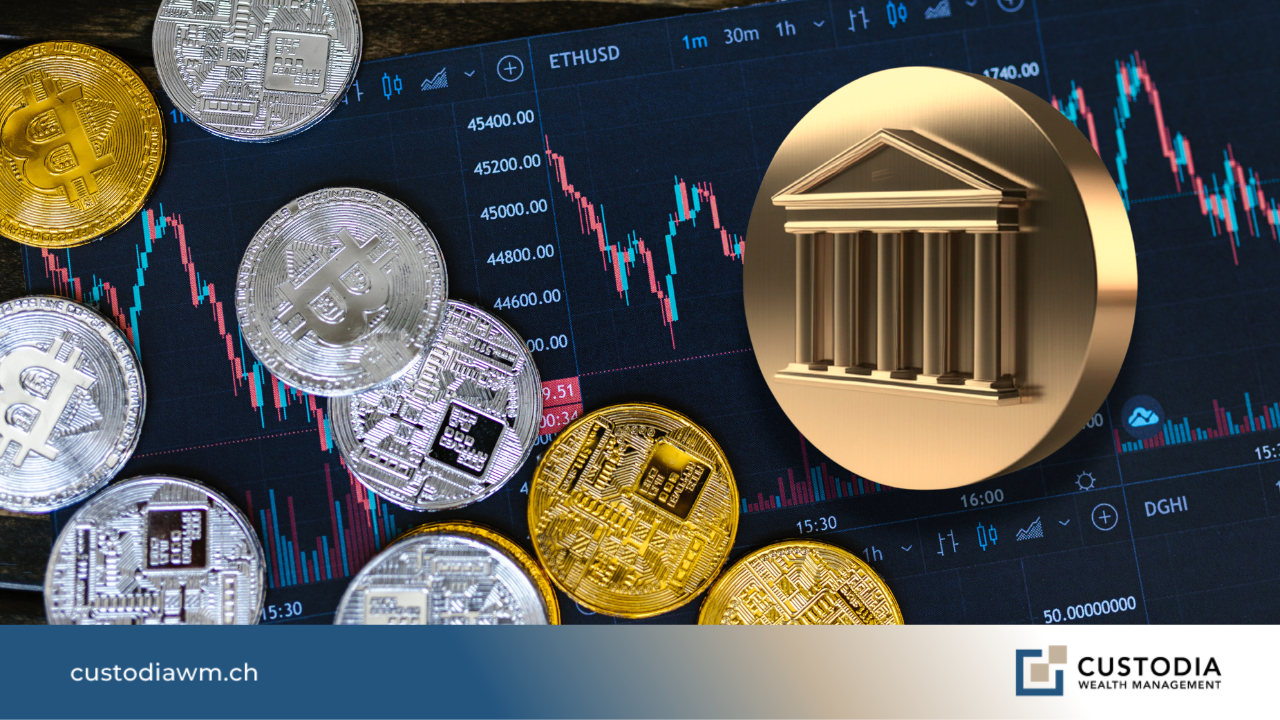
In recent years, blockchain technology has evolved from being viewed as a niche innovation—closely associated with the world of cryptocurrencies—to becoming one of the areas of greatest interest to the world’s leading financial institutions. Investment banks, asset managers, market infrastructures, and regulatory authorities are, in fact, exploring how to use this technology to modernize the architecture of financial markets, with the goal of reducing operating costs, increasing process efficiency, and enabling the continuous, automated trading of financial instruments.
This evolution represents a significant shift from the perception the sector had developed in the years following Bitcoin’s inception. For over a decade, blockchain was generally associated with cryptocurrencies and the high volatility that characterized those markets. The numerous crises that have affected the sector, the failure of major operators, and the absence of a sufficiently defined regulatory framework have contributed to keeping traditional financial institutions cautious: the technology was often considered promising in theory but still immature for systemic applications in regulated markets.
In recent years, this landscape has gradually changed. Regulatory developments in numerous jurisdictions, central banks’ growing interest in digital currencies, the proliferation of stablecoins, and—above all—the development of so-called financial asset tokenization have brought blockchain back into the spotlight for institutional players. In particular, the interest from traditional finance is not so much in cryptocurrencies as a new asset class, but rather in the possibility of using blockchain infrastructure to digitally represent existing financial instruments and automate their lifecycle.
This shift is well illustrated by the article “Wall Street Learns to Love Blockchain,” published by the Financial Times this week. The article describes how numerous financial institutions—including major international banks, asset managers, stock exchanges, and companies that manage clearing and settlement infrastructure—are investing hundreds of millions of dollars in the development of blockchain-based platforms. According to the authors, this phenomenon could profoundly transform the functioning of financial markets, enabling continuous trading of financial instruments, the automation of numerous administrative processes, and a significant reduction in transaction settlement times.
However, the growing focus on blockchain does not necessarily imply the adoption of the original philosophy that inspired the creation of Bitcoin. The project developed by Satoshi Nakamoto in 2008 aimed to create a “trustless” monetary system—that is, one capable of functioning without the need for central intermediaries. The blockchain used today by institutional finance, however, pursues different goals: banks, asset managers, and issuers continue to play a central role in the issuance, custody, and management of financial instruments. What has changed is primarily the technological infrastructure used to record asset ownership and automate certain operational processes.
In this sense, blockchain does not replace the existing financial system but rather presents itself as a possible evolution of its infrastructure. The innovation lies not in eliminating intermediaries, but in integrating them into a digital ecosystem characterized by greater programmability, greater interoperability, and significantly shorter execution times compared to traditional architectures.
The objective of the report, which can be downloaded from our website, is to critically analyze this evolution, illustrating the principles of financial asset tokenization, the role of smart contracts, the characteristics of the main public blockchains, and the technological and systemic risks associated with their growing adoption in financial markets.
Disclaimer
This post reflects the personal opinions of the Custodia Wealth Management staff members who authored it. It does not constitute investment advice or recommendations, nor does it constitute personalized advice, and should not be considered an invitation to engage in transactions involving financial instruments.
